

Introduction
Selecting the right development methodology is a critical decision that can significantly impact the success of a software project. Among the various methodologies available, Agile and Waterfall are two of the most widely used approaches. Each has its own strengths and weaknesses, and the choice between them depends on the specific needs and constraints of the project. In this blog post, we will compare and contrast Agile and Waterfall methodologies, highlighting their advantages, disadvantages, and suitability for different types of projects.
Understanding Waterfall
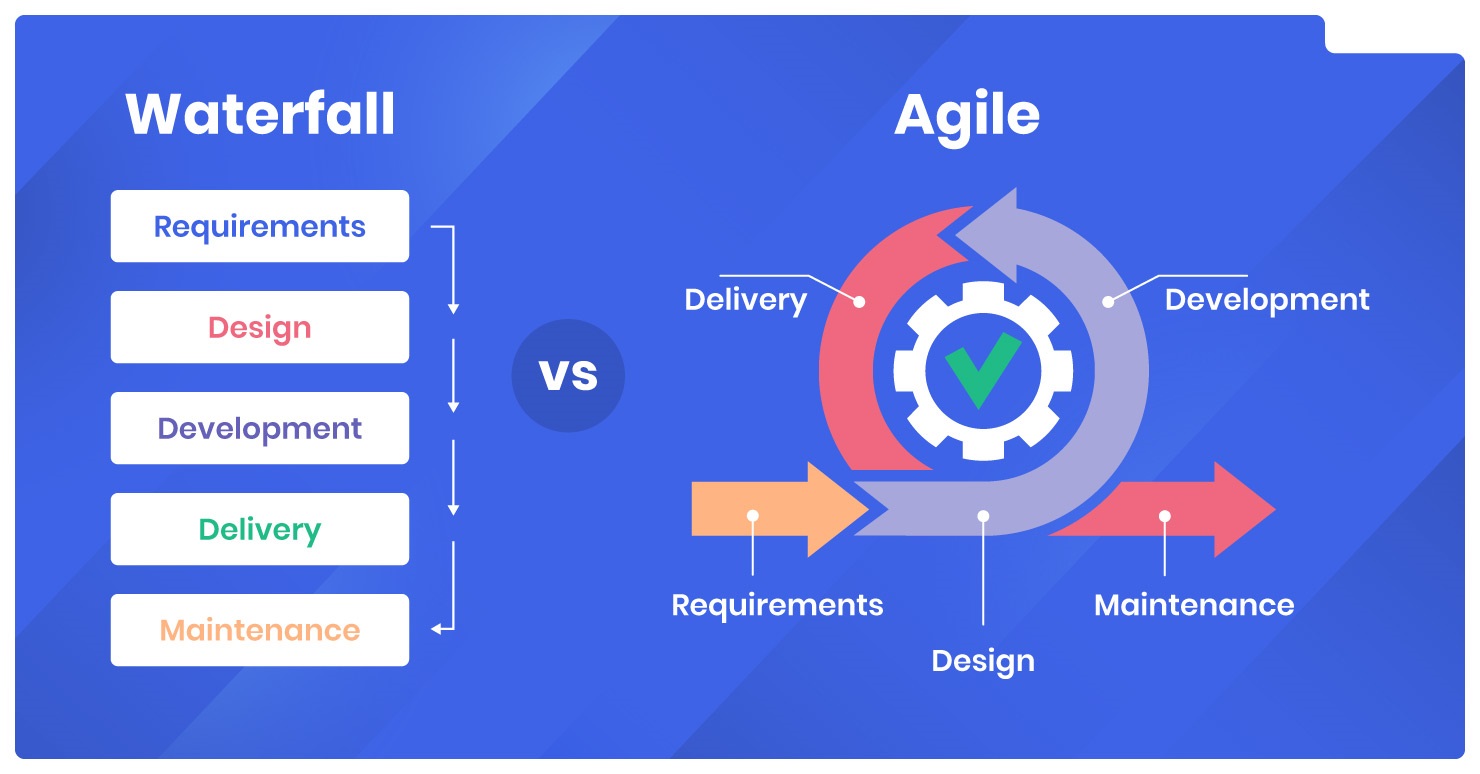
The Waterfall methodology is a linear and sequential approach to software development. It is often considered the traditional model and has been widely used since the early days of software engineering.
Advantages of Waterfall:
- Clear Structure: The Waterfall model is straightforward, with clearly defined stages: requirements, design, implementation, testing, deployment, and maintenance. This structure makes it easy to understand and manage.
- Defined Requirements: Since all requirements are gathered and documented at the beginning of the project, there is a clear roadmap to follow. This can be particularly useful for projects with well-defined and stable requirements.
- Easy to Manage: The linear nature of Waterfall allows for easy tracking of progress, making project management more straightforward.
Disadvantages of Waterfall:
- Inflexibility: One of the main drawbacks of Waterfall is its rigidity. Changes to requirements are difficult to accommodate once the project is underway.
- Late Testing: Testing occurs only after the development phase is complete. This can lead to the late discovery of critical issues, which may be costly and time-consuming to fix.
- Risk of Misalignment: If the initial requirements are not well-understood or if they change over time, there is a high risk of developing a product that does not meet the user’s needs.
Understanding Agile
Agile is an iterative and incremental approach to software development. It emphasizes flexibility, collaboration, and customer feedback, and it is designed to accommodate changes throughout the development process.
Advantages of Agile:
- Flexibility: Agile allows for changes to be made at any stage of the development process. This makes it ideal for projects with evolving requirements.
- Continuous Feedback: Agile involves regular feedback from stakeholders, ensuring that the product meets their needs and expectations. This continuous feedback loop helps to catch and address issues early.
- Faster Delivery: By breaking the project into smaller iterations, Agile allows for the delivery of functional components quickly. This can provide value to users earlier and help in validating assumptions.
Disadvantages of Agile:
- Scope Creep: The flexibility of Agile can lead to scope creep, where additional features and changes are continuously added, potentially extending the project timeline and increasing costs.
- Less Predictability: Agile projects may be less predictable in terms of time and budget compared to Waterfall projects, as requirements can change frequently.
- Requires High Collaboration: Agile requires close collaboration and communication among team members and stakeholders. This can be challenging if the team is not co-located or if there is a lack of engagement from stakeholders.
Suitability for Different Projects
Choosing between Agile and Waterfall depends on various factors, including the nature of the project, the clarity of requirements, and the team’s experience.
When to Use Waterfall:
- Clear and Stable Requirements: If the project requirements are well-defined and unlikely to change, Waterfall can provide a clear and structured approach.
- Regulated Environments: Projects in highly regulated industries, where documentation and compliance are critical, may benefit from the rigorous documentation and structured phases of Waterfall.
- Short-Term Projects: For smaller, short-term projects with clear goals and limited scope, Waterfall can be an efficient methodology.
When to Use Agile:
- Evolving Requirements: If the project requirements are expected to change or are not fully understood at the outset, Agile’s flexibility makes it a better choice.
- Complex and Long-Term Projects: Agile is well-suited for large, complex projects that require continuous improvement and stakeholder feedback.
- Innovative Projects: Projects that involve a high degree of innovation and experimentation can benefit from Agile’s iterative approach, allowing for quick adjustments based on user feedback.
Conclusion
Both Agile and Waterfall have their place in the software development landscape. The key is to understand the specific needs of your project and select the methodology that best aligns with those needs. Waterfall offers a clear, structured approach that can be effective for projects with stable requirements, while Agile provides the flexibility and responsiveness needed for projects with evolving needs and a focus on continuous improvement. By carefully considering the characteristics of your project and the strengths of each methodology, you can make an informed decision that sets your team up for success.

